
Some cats are born zen. Most need a little help. Whether your cat is a full-time worrier or just falls apart every time the suitcase comes out, these eight strategies — drawn from feline behavior research and what vets actually recommend — can genuinely move the needle.
1. Protect the routine
Cats are creatures of ritual. Feed at the same times, play at the same times, and keep their key resources (bed, litter, bowls) in stable locations. If a disruption is coming — travel, guests, renovation — keep everything else as predictable as possible.
2. Give them somewhere to go up — and somewhere to hide
Vertical territory (cat trees, shelves, windowsill perches) lets cats survey their world from safety, and a covered hideaway gives them an exit when things get overwhelming. A cardboard box in a quiet corner is genuinely therapeutic. Never pull a hiding cat out of their refuge — let them decompress.
3. Play like prey, every day
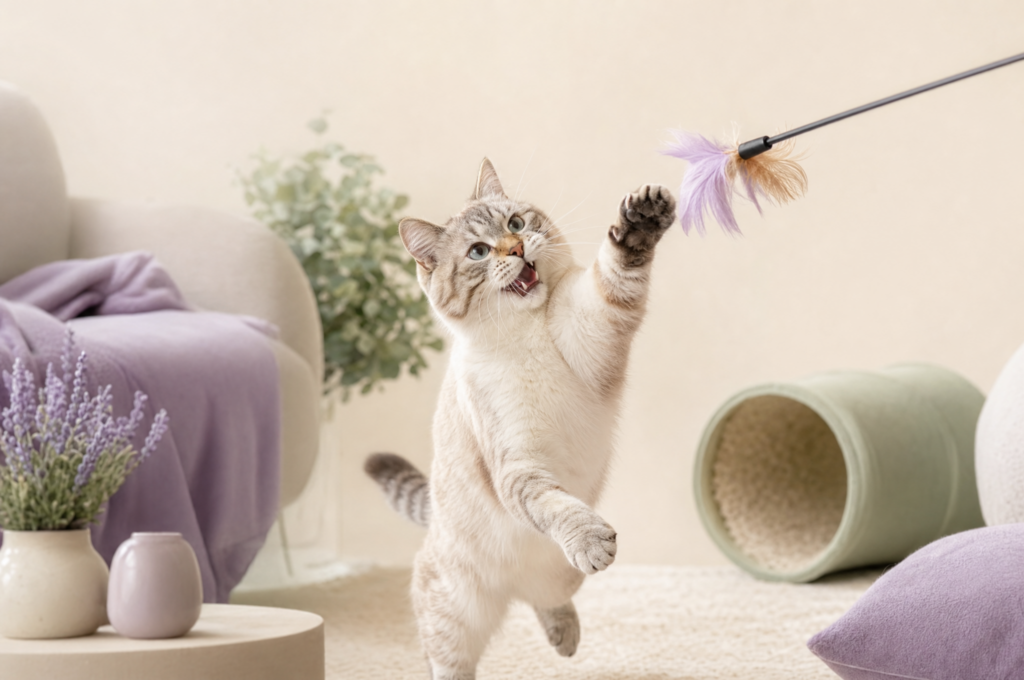
A wand toy that moves like a wounded bird for 10–15 minutes, twice a day, followed by a small meal — that’s the hunt-catch-kill-eat sequence cats are wired for. It burns anxious energy and ends in the deep relaxation that follows a successful “hunt.”
4. Rethink the litter box situation
Boxes should be large, uncovered, cleaned daily, and placed in quiet, low-traffic spots with clear sightlines. Multi-cat homes need one box per cat plus one. Many “stress” behaviors are really litter box complaints in disguise.
5. Use scent to your advantage
Scent is a cat’s emotional language. Avoid strong cleaners and air fresheners near their spaces, don’t wash all their bedding at once, and let them rub their cheeks on you and the furniture — those facial pheromones mark territory as safe.
6. Try calming supplements
Certain natural ingredients have real evidence behind gentle calming effects in cats:
- L-theanine — an amino acid from green tea associated with relaxed alertness, not sedation.
- Chamomile — the same gentle botanical humans have used for centuries.
- Valerian root — well known for supporting relaxation.
- Tryptophan — a building block of serotonin, the “content” neurotransmitter.
These are exactly the ingredients we built into PetY Calm — a daily, non-drowsy calming chew that tastes like a treat, designed for everyday support and extra help before stressful events like travel or vet visits.
7. Manage the triggers you can’t remove
For window-territory disputes, block the view with frosted film. For noise, create a padded den in the quietest room. For carrier panic, leave the carrier out year-round as a cozy bed so it stops predicting doom.
8. Know when it’s more than stress
If your cat suddenly hides constantly, stops eating, over-grooms to bald patches, or has any litter box changes — see your vet first. Pain and illness are brilliant mimics of anxiety, and no calming strategy should delay a medical diagnosis.
This article is for general information only and isn’t a substitute for veterinary advice. Calming supplements are not intended to diagnose, treat, cure, or prevent any disease.